
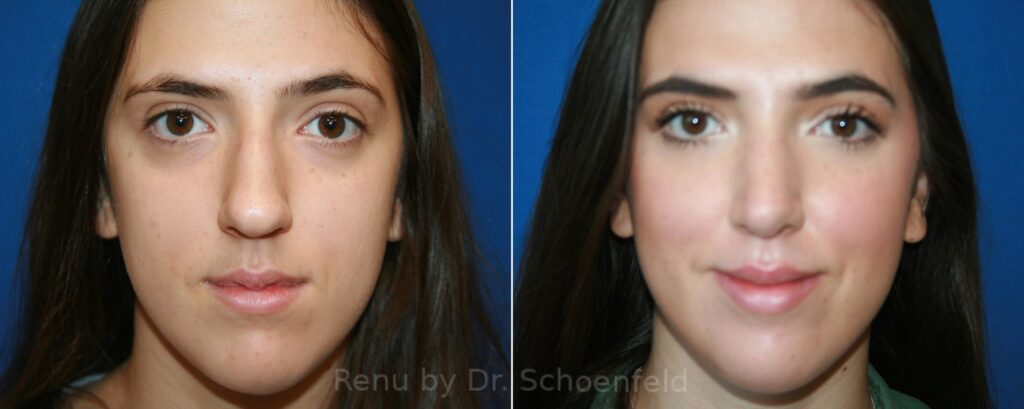
If you’ve ever looked closely at a photo of yourself and thought, “Why is one nostril bigger than the other?”, you’re in very good company. Nostril asymmetry is one of the most common things people notice about their nose, and in most cases it’s completely normal.
Still, for some people the difference is more than a quirk. It might bother you in photos, affect how you breathe, or have appeared after an injury or an earlier procedure. Below, we explain what causes uneven nostrils, when it’s nothing to worry about, and when rhinoplasty surgery in Washington, DC may be worth considering.
Is It Normal for One Nostril to Be Bigger Than the Other?
Yes. The human face isn’t perfectly symmetrical, and the nose is no exception. Slight differences in nostril size, shape, or position are extremely common, and many people never notice them.
Nostril asymmetry usually falls into one of two categories:
- Cosmetic asymmetry: the nostrils look different in size or shape.
- Functional asymmetry: one side feels more blocked or doesn’t move air as well.
Some people have both. That distinction matters because it determines which treatment, if any, makes sense.
7 Common Reasons One Nostril Looks Bigger
1. Natural facial asymmetry
The bones, cartilage, and soft tissue of your nose develop slightly differently on each side. This is the most common reason, and it’s usually not a medical issue.
2. A deviated septum
The septum is the wall of cartilage and bone that divides your nose into two passages. When it sits off-center, one nostril can look smaller or larger, and one side may feel more blocked. Many patients with a deviated septum also notice trouble breathing, snoring, or congestion on one side. You can read more in our post on whether a deviated septum can be corrected.
3. Asymmetry in the nasal tip
The lower cartilages that shape the tip of your nose strongly influence how your nostrils look. If those cartilages differ from side to side, your nostrils will too. This is something a surgeon can address with nose tip plasty.
4. A crooked nose
When the whole nose leans or curves to one side, the nostrils often follow. If that sounds familiar, see how a crooked nose is fixed.
5. Previous injury or nose surgery
A broken nose, a sports injury, or an earlier nose job can change the structure of the nose and leave the nostrils uneven. In these cases, revision rhinoplasty may be an option.
6. Differences at the nostril rim or base
The nostril “wings” (alar rims) and the base of the nose can be wider, thicker, or positioned differently on one side. This can make one nostril look larger even when the internal structure is similar.
7. The nasal cycle (and how you’re standing)
Here’s one that surprises people. Your body naturally alternates swelling between the two sides of your nose every few hours, so one side often feels more open than the other. This is called the nasal cycle, and the Cleveland Clinic explains how it works in plain language. It affects how your nose feels, and head angle, lighting, and camera distance can change how your nostrils look in photos.
When Should You See a Plastic Surgeon?
Uneven nostrils don’t need treatment on their own. But it may be time for a consultation if:
- The asymmetry bothers you or affects your confidence
- One side is consistently blocked or hard to breathe through
- The change appeared after an injury or surgery
- You’re unhappy with the results of a previous nose job
- You’ve been told you have a deviated septum or nasal valve problem
Persistent one-sided blockage, especially with unusual discharge or bleeding, should also be checked by a medical professional to rule out other causes.
How Can Uneven Nostrils Be Corrected?
The right approach depends on what’s causing the difference. During a consultation, Dr. Schoenfeld evaluates the structure of your nose, your breathing, and your goals before recommending anything.
Nose tip plasty. If the asymmetry comes from the tip cartilages, refining the tip can bring the nostrils into better balance. Learn more about nose tip plasty in Washington, DC.
Rhinoplasty surgery. When the issue involves several parts of the nose, such as the bridge, tip, and nostrils together, a full rhinoplasty in Washington, DC can address them in one coordinated plan.
Functional rhinoplasty. If breathing is part of the problem, functional rhinoplasty can improve airflow while refining how the nose looks.
Non-surgical rhinoplasty. For some mild contour irregularities, dermal fillers can create a temporary improvement without surgery. This works best for minor concerns, and it isn’t right for every nose. See our page on non-surgical rhinoplasty.
What to Expect at Your Rhinoplasty Consultation
A good nose surgery consultation shouldn’t feel rushed. At RENU, you can expect:
- A careful exam of both the outside and inside of your nose
- A conversation about your goals, both how you want to look and how you want to breathe
- Computer imaging to help you visualize possible changes
- A clear plan, including recovery expectations (see our guide to the recovery time for rhinoplasty)
Because rhinoplasty is one of the most technically demanding procedures in plastic surgery, choosing a surgeon with deep experience in nose surgery matters. You can meet Dr. Philip S. Schoenfeld, M.D., F.A.C.S., browse before-and-after results, and read patient reviews before you decide.
Frequently Asked Questions
Why is one nostril bigger than the other?
Usually natural facial asymmetry. Other causes include a deviated septum, tip cartilage differences, a crooked nose, past injury or surgery, and the normal nasal cycle.
Is having uneven nostrils a medical problem?
Not by itself. It’s only a concern if you also have breathing problems, persistent blockage, or the change was sudden or followed an injury.
Can rhinoplasty fix uneven nostrils?
In many cases, yes. Depending on the cause, nose tip plasty, rhinoplasty, or functional rhinoplasty can improve symmetry. Results vary by patient, and a consultation is the only way to know what’s realistic for you.
Can fillers fix uneven nostrils?
Fillers can sometimes soften minor contour differences temporarily, but they can’t correct structural problems like a deviated septum.
Will nose surgery change how I breathe?
It can, depending on the procedure. Functional rhinoplasty is designed to improve breathing, while a purely cosmetic approach focuses on appearance. Your surgeon will plan around both.
Ready to Talk About Your Nose?
If uneven nostrils are on your mind, a consultation is the best way to find out what’s causing them and what your options are. Dr. Philip S. Schoenfeld and the RENU team offer rhinoplasty and nose surgery for patients in Washington, DC and Chevy Chase, MD.
Book your rhinoplasty consultation online or learn more about RENU’s surgical consults.
This article is for general education and isn’t a substitute for medical advice. Only an in-person evaluation can determine the cause of nostril asymmetry and the best treatment for you.
